


The Mind Behind the Medals
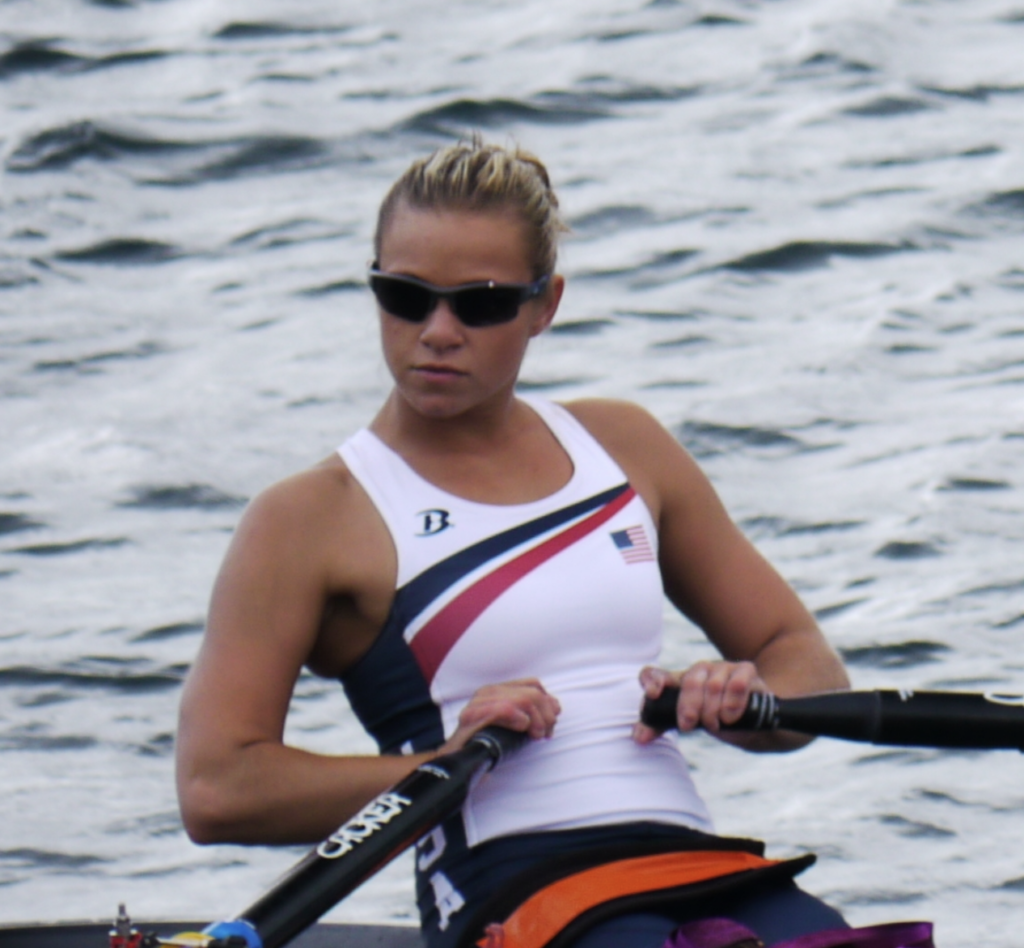
Masters at the 2012 London Paralympics, where she earned her first medal. Photo: Rob Jones / Creative Commons..
Oksana Masters is a hardcore athlete. Representing Team USA in the 2026 Milano Cortina Winter Paralympics, she has competed in eight consecutive Paralympics, winning 24 medals across Nordic skiing, biathlon, rowing, and cycling. In this year’s Paralympics, she earned five gold medals in biathlon and Nordic skiing. But what sets her apart is her mental game.
Masters has had to work uphill from the start. Born in Ukraine, she spent her early childhood in three orphanages before being adopted at the age of seven by a single American parent. She later underwent two leg amputations at ages nine and 14.
Masters’ experiences have just led her to work harder. She started rowing at age 13, and 10 years later, at the 2012 Paralympics in London, she won her first medal alongside her mixed double sculls partner Rob Jones. But she didn’t stop there. In the years that followed, she challenged herself in Nordic skiing, cycling, and biathlon, winning multiple Paralympic medals in those sports as well.
One of the keys to Masters’ success has been developing her mental skills.
In a 2026 interview with Nike, she reflected on her mindset, explaining that she doesn’t define herself by a single sport or result. “Resetting each season has taught me adaptability. It’s taught me how to listen to my body, how to trust the process and how to separate my identity from one sport or one result.” She focuses on being adaptable, staying curious, and learning from every race.
Masters carries this mindset into every competition. She sees each race as a fresh opportunity to challenge herself and see what’s possible. In the same 2026 interview with Nike, she stated, “Every race is a new moment. Everything that came before it – the setbacks, the injuries, the training – all comes down to those few minutes where you get to test yourself again.” In the same interview, she describes the power of “that reset” and how it reminds her “why [I] fell in love with sport in the first place,” adding that her emphasis is not on “perfection,” but on “seeing what happens when preparation meets belief.”
In addition to approaching competition with a strong mindset, Masters practices techniques like visualization and breathing to manage pressure and stay calm.
Before a race, she pictures not only the ideal outcome but also the challenges that might come up. In a 2021 interview with ESPN, Masters said, “I try to have the perfect race strategy and my visualization set the day before the race.” In the same interview, she points out having to simultaneously “visualize when things go wrong and adjust on the fly.” This strategy helps her to aim high while also preparing her to respond, instead of break down, when things don’t go as planned.
On the start line, Masters uses breathing to get in the zone for a race. In the 2021 ESPN interview, she explained, “I do nothing but focus on my exhale, the breath and just count to 10 over and over and over.” She then went on to state that breathing helps her calm down by giving her something else to focus on: “I’m just focused on the counting. I’m letting my body go on autopilot.”
Masters emphasizes the importance of social support in building mental strength. She has been open about her past struggles with accepting help, but attributes much of her progress to her mother. In a 2026 interview with People magazine, Masters described that her mother gives her a safe space to be vulnerable and express fear, while also helping rebuild her confidence.
Understanding that mental strength is trained, not innate, has played an important role in Masters’ career. In a 2024 interview with Team USA Masters credited working with a sports psychologist as a key factor in her shift from “inconsistent” biathlon results to reaching the podium and winning events.
Masters has faced many challenges in her life, but she hasn’t let them define her. While her struggles built a foundation of strength and resilience, through mental training she has turned that foundation into something more. Her story shows that athletes can develop, practice, and strengthen their mental game.
Learn more about the Mental Strength Training Program and the tools we are building at The Sports Institute at UW Medicine to strengthen the mental game for athletes of all levels by visiting becomingmentallystrong.com